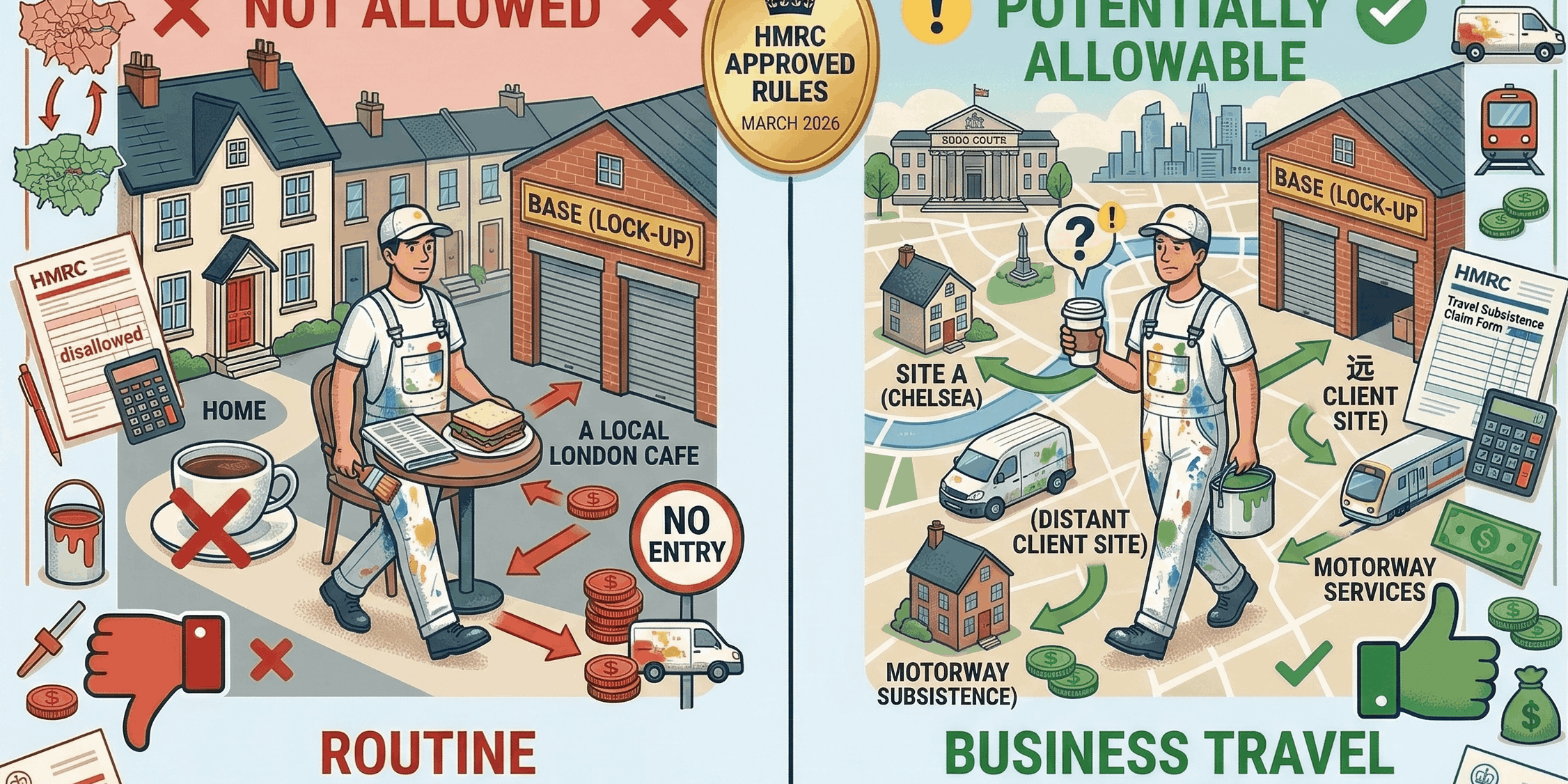
When Home-to-Site Travel is Disallowed
As with other self-employed individuals and employees, you generally cannot claim for your regular daily commute. For a self-employed decorator in London, this typically means:
- Routine Daily Commute: Traveling from your main residence to a single long-term contract site, a regular supplier, or a principal business base (like a lock-up or workshop) is considered commuting.
- Routine Base Travel: If you have a primary place you go to work (even if you then travel elsewhere), the travel to that base is personal, not a business expense incurred “wholly and exclusively” for your practice.
When Travel is Allowable as a Business Expense
There are clear situations where travel expenses become legitimate business claims. These usually involve moving between job locations or traveling for specific case work away from a established base:
- Travel Between Multiple Jobs: Journeys between different client job sites in the same day (e.g., from Chelsea to Battersea) are fully claimable.
- Lock-up to Client Sites: If you have an established business base (like a lock-up, separate from your home) and travel from there to varying temporary locations for client work, that travel is typically claimable.
- Occasional Travel: Journeys that are not routine and are specifically for the purpose of a business activity (like an unexpected trip to pick up specialized materials) can often be claimed.
Key Considerations for Your Travel Claims
- Identify Your Base: HMRC focus on determining where your principal “base” of operations is. Routine travel to that base is personal.
- Temporary vs. Permanent Sites: Be aware of the difference between a temporary workplace (where you go for a fixed period or purpose) and a permanent workplace (where you work routinely).
- Document and Record: As with all business expenses, you must maintain accurate, detailed records of your journeys, including receipts and the purpose of each trip.
Archers Accountants brings clarity to your business expenses