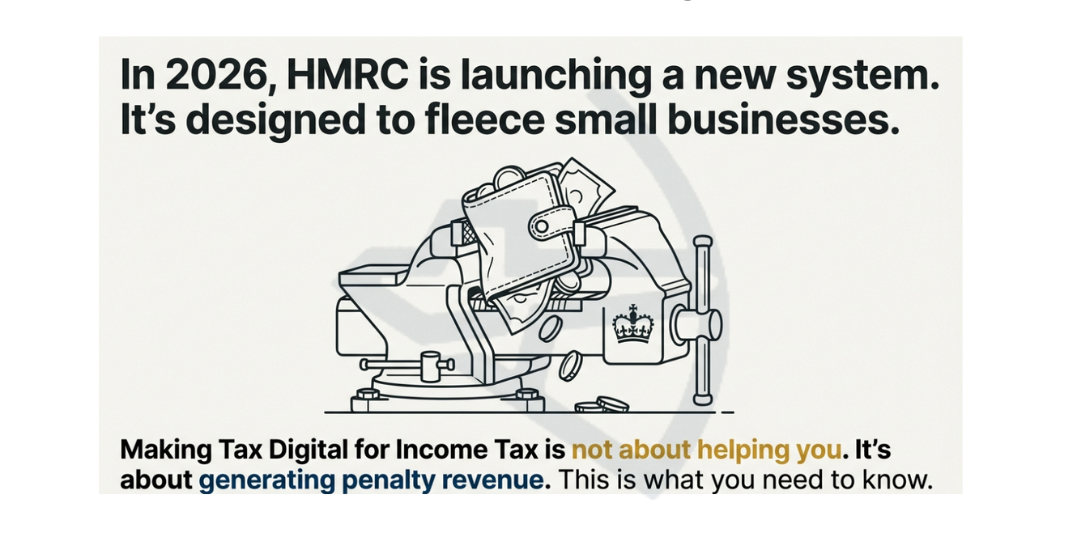
Let’s stop pretending that Making Tax Digital (MTD) for Income Tax Self Assessment is a gift to small businesses. The marketing from HMRC suggests it’s about “modernization” and “reducing errors.” But if you look at the mechanics of the system launching in April 2026, it looks a lot less like a helping hand and a lot more like a vice.
At Archers & Co, we believe in “straight talking.” And the straight talk is this: MTD is a fundamental shift that places a massive administrative and financial burden on the smallest taxpayers in the UK.
The End of the “Once a Year” Relief
For decades, being a sole trader or a landlord meant one big stressful push in January to get your Self Assessment done. It wasn’t perfect, but it was manageable.
Under MTD, that is dead. Instead, you are looking at:
- Quarterly Updates: You must send digital updates of your income and expenses every three months.
- Digital Record Keeping: Paper ledgers and simple spreadsheets won’t cut it anymore; you must use HMRC-compatible software.
- The Final Declaration: You still have to do an end-of-year process to finalize your tax.
That is five separate interactions with HMRC every single year, rather than one.
Why “Penalty Revenue” is the Real Goal
HMRC’s own impact assessments admit that the “tax gap”—the difference between tax owed and tax collected—is largely driven by small errors. By forcing you to report four times a year, they aren’t just looking for accuracy; they are increasing the surface area for mistakes.
More deadlines mean more opportunities for:
- Late filing penalties.
- Accuracy penalties.
- Interest charges on late payments.
Is your business ready for the April 2026 shift, or are you waiting for the first penalty notice to arrive?
Book a “Straight Talk” MTD Consultation with Archers & Co today.